TelusGuardAI — Network Impact Analyzer
AI-powered network impact analysis system that detects and analyzes service disruptions during events using a multi-agent orchestration framework. Processes natural language queries, gathers intelligence from web and weather sources, and generates geospatial impact assessments.
Problem & Context
Network Operations Center (NOC) engineers need rapid, data-driven network outage analysis during weather events, infrastructure failures, and other service disruptions. This system addresses that by automating network impact analysis — processing natural language queries, aggregating multi-source intelligence (web searches, weather data), and generating geospatial impact assessments with affected areas, severity levels, and confidence scores for prioritizing response efforts.
What It Does
- Multi-agent AI orchestration: three specialized agents parse queries, gather intelligence, and analyze geographic impact
- Natural language query processing (e.g., "What areas were affected by the ice storm in Toronto?")
- Intelligent web search and weather data integration (OpenWeatherMap)
- Geospatial reasoning with precise coordinates and impact radii
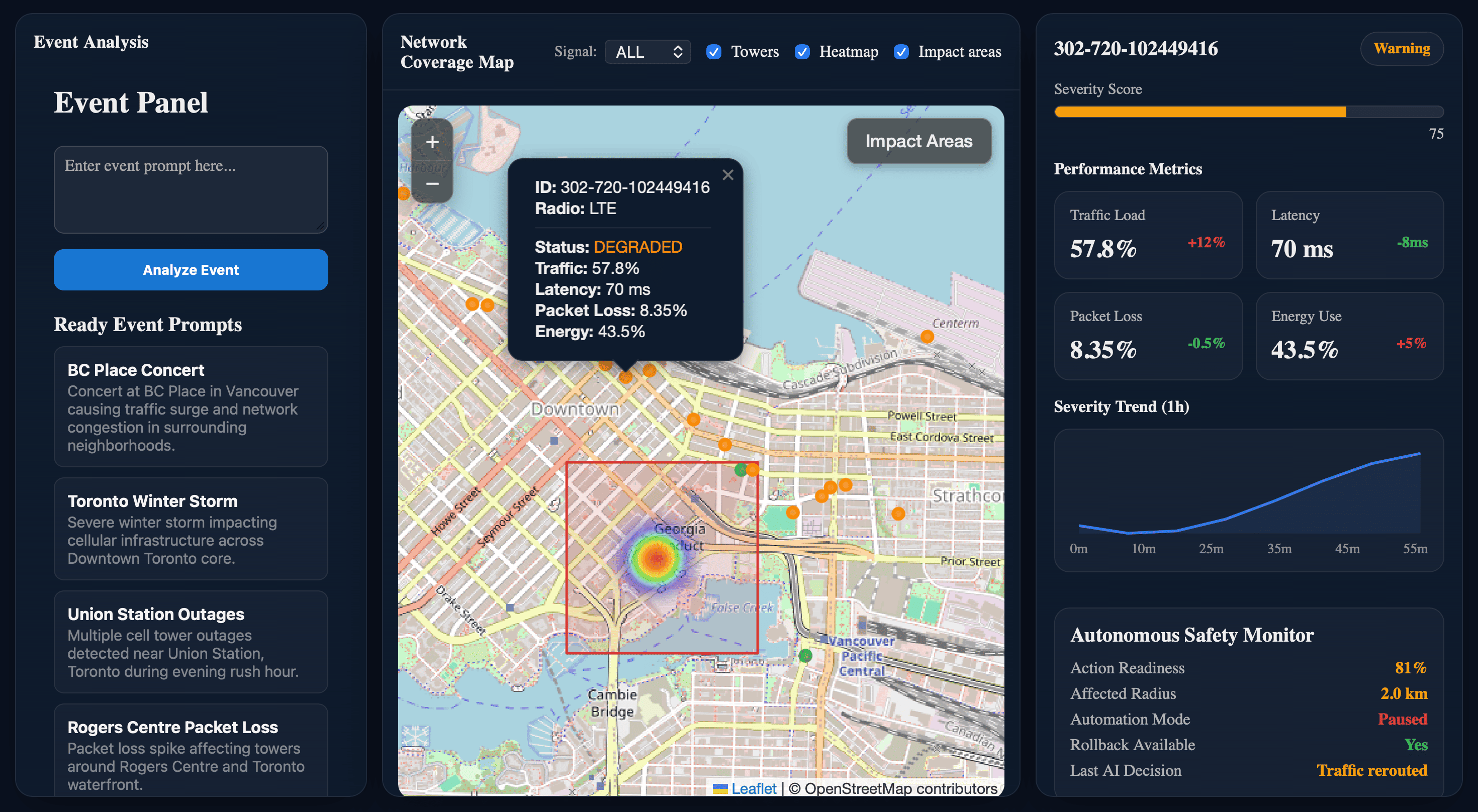
- Interactive Leaflet map with tower locations, impact zones, and heatmaps
- Real-time KPI monitoring for individual towers
- Caching (5-minute TTL) and confidence scoring for each affected area
- Severity assessment: critical, high, moderate, or low
Tech Stack
Architecture / How It Works
Three-tier architecture: Frontend (React + Vite, Leaflet maps), Backend (Flask REST API, multi-agent orchestrator, in-memory cache), and AI Agent Layer. Three specialized agents work in sequence:
- Event Intelligence Agent (Gemma): Parses NL queries, extracts metadata, generates search queries
- Web Intelligence Agent: Executes parallel web searches, fetches weather data, aggregates results
- Geospatial Reasoning Agent (GPT): Analyzes data, identifies affected areas with coordinates, severity, and confidence
Data flows: User query → Event Intelligence → Web Intelligence → Geospatial Reasoning → Orchestrator → Cache → Frontend visualization.
Key Takeaways
Built for the AI at the Edge Hackathon, this project demonstrates production-quality multi-agent AI orchestration for network impact analysis. The modular architecture — with clear separation between frontend, backend, and AI agents — is designed to be extensible with real API integrations and additional data sources. Working with Telus AI Gateway and multiple LLM models (Gemma, DeepSeek, GPT) provided hands-on experience in coordinating AI agents for complex analytical tasks.